Boosting productivity growth by creating equal workplace opportunities for all
Promoting equal opportunity in the workplace is often framed around fairness. Fairness is important, but this narrow focus overlooks the ways pay gaps and other inequalities affect the wider economy.
This programme is about identifying how much the lack of diversity and inclusion costs Aotearoa New Zealand in lost outputs/productivity, and developing practical tools businesses can use to capture the benefits of a more equal workforce.
This programme is funded by a Ministry of Business, Innovation and Employment Endeavour Grant.
Programme overview (PowerPoint Presentation)
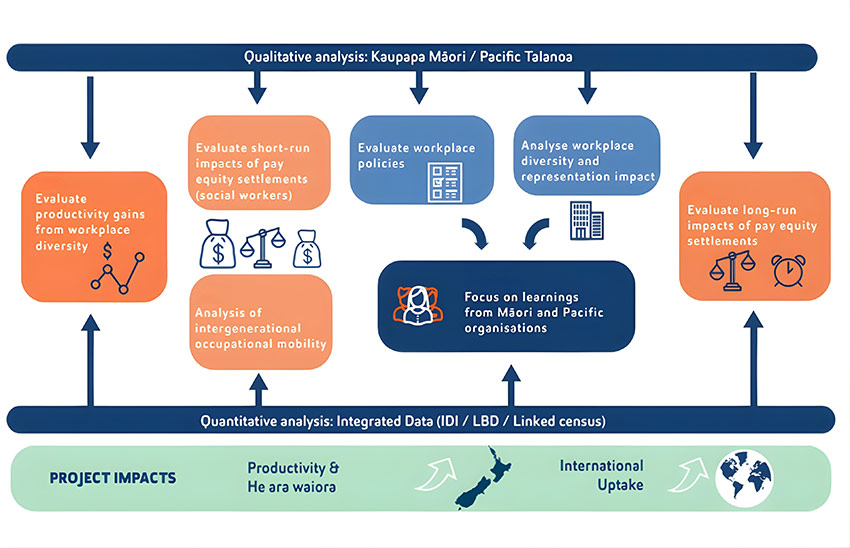
About the programme
Timeframe: October 2024 to September 2029
Programme team
The programme is being led by the New Zealand Policy Research Institute (NZPRI) at AUT | Te Wānanga Aronui o Tāmaki Makau Rau.
Research aims
The following research aims align with each year of this 5 year programme:
- Aim 1a - Understand long run trends in occupational segregation in NZ
- Aim 1b - Evaluate potential productivity gains from workplace diversity
- Aim 2a - Evaluate historical pay equity policy initiatives
- Aim 2b - Assess intergenerational occupational mobility in NZ
- Aim 3a - What workplace practices are associated with more diverse organisations? And what are the examples from Māori and Pacific businesses aimed at creating more equal opportunities?
- Aim 3b - What is the change agent evidence from organisations leading the way in equal workplace opportunities?
- Aim 4 - Analyse the labour market impact of representation and diversity in workplace leadership
- Aim 5 - Evaluate both short term and long term effects of historical pay equity settlements in NZ
What we've been doing
Research outputs
We release working papers, articles, reports and presentations which are relevant to the programme and the outcomes.
For research participants
Advisory Group